
- May 8, 2026
- Posted by: medconverge
- Category: RCM
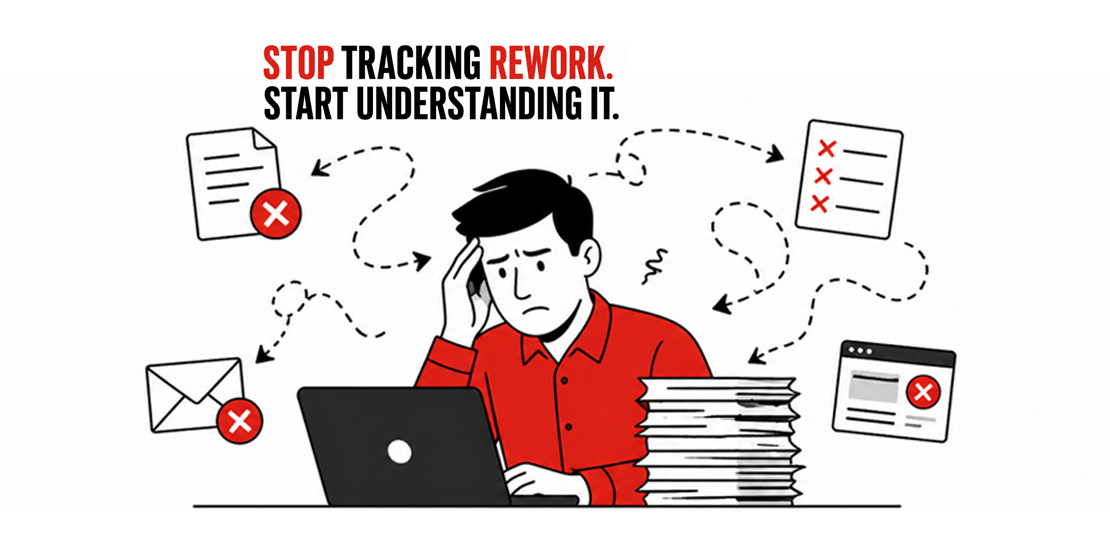
Most Teams Track “Rework”. Very Few Actually Understand It.
And that’s where the problem begins.
Because when everything gets labelled as rework, nothing really gets fixed.
The Comfort of a Single Bucket
In most RCM teams, rework sits as a single metric.
It shows up in reports.
It gets discussed in reviews.
It gets blamed during performance conversations.
But no one stops to ask:
- What exactly are we calling rework?
- Is it a claim corrected due to a payer rule?
- Is it a system glitch that forced a resubmission?
- Is it a mistake made by an analyst?
All of this gets grouped into one number.
And that number becomes misleading.
Not All Rework Is the Same
If you want to actually reduce rework, you need to break it down. Because each type has a completely different root cause—and more importantly, a completely different fix.
1. System Errors
This is the easiest to miss and the hardest to challenge.
System errors happen when your tools, configurations, or integrations fail you.
Think:
- Incorrect payer mapping
- Broken edits in your billing system
- Eligibility pulling outdated data
- Automation pushing wrong codes or modifiers
The team ends up “fixing” these issues manually.
But here’s the truth:
This isn’t team inefficiency. This is a system failure.
Yet, in most setups, the burden still falls on the team.
What Should Happen Instead
- Identify repeat corrections coming from the same source
- Audit system configurations regularly
- Create a feedback loop between operations and IT
If you don’t fix system-driven rework at the root, your best performers will still look average.
2. Process Gaps
This is where operations design starts showing cracks.
Process gaps happen when:
- Steps are unclear
- Ownership is undefined
- Information doesn’t flow properly between teams
Example:
Eligibility misses a detail → Coding proceeds → Billing submits → AR fixes the denial.
That entire chain becomes “rework.”
But the actual issue?
The process allowed the error to travel forward.
What Should Happen Instead
- Define clear checkpoints (not just end-stage corrections)
- Establish accountability at each stage
- Track where the error originated, not where it was caught
If your process allows errors to pass through multiple stages, rework will always exist, no matter how skilled your team is.
3. Human Errors
This is the most visible and the most overblamed.
Yes, people make mistakes:
- Incorrect data entry
- Missed documentation
- Wrong code selection
- Skipped validation steps
But here’s where most teams get it wrong:
They stop at “who made the mistake” instead of asking “why it happened.”
- Was the workload unrealistic?
- Was the training incomplete?
- Was the SOP unclear or outdated?
Human error is rarely just about the individual.
What Should Happen Instead
- Identify patterns, not isolated incidents
- Align training to actual error trends
- Fix workload distribution before blaming accuracy
If you treat all human errors as performance issues, you’ll create fear, not improvement.
Why This Distinction Matters
When you don’t define rework properly:
- High performers get penalised for system issues
- Managers chase symptoms instead of causes
- Leadership sees inflated inefficiency
- The same errors repeat, quietly and consistently
And over time, rework becomes “normal.”
That’s the real risk.
What a Better Approach Looks Like
Start simple.
Instead of one rework bucket, split it into three:
- System-driven
- Process-driven
- Human-driven
Then ask one question for every corrected claim:
Where did this actually start?
Not where it was fixed.
Not who touched it last.
But where it began.
That one shift changes everything.
The Bottom Line
Rework is not just a productivity problem.
It’s a visibility problem.
If you don’t define it properly, you’ll keep fixing the same issues, just at different stages, by different people, under different labels.
And your team will keep working harder…
Without actually getting better.