
- May 21, 2026
- Posted by: medconverge
- Category: RCM
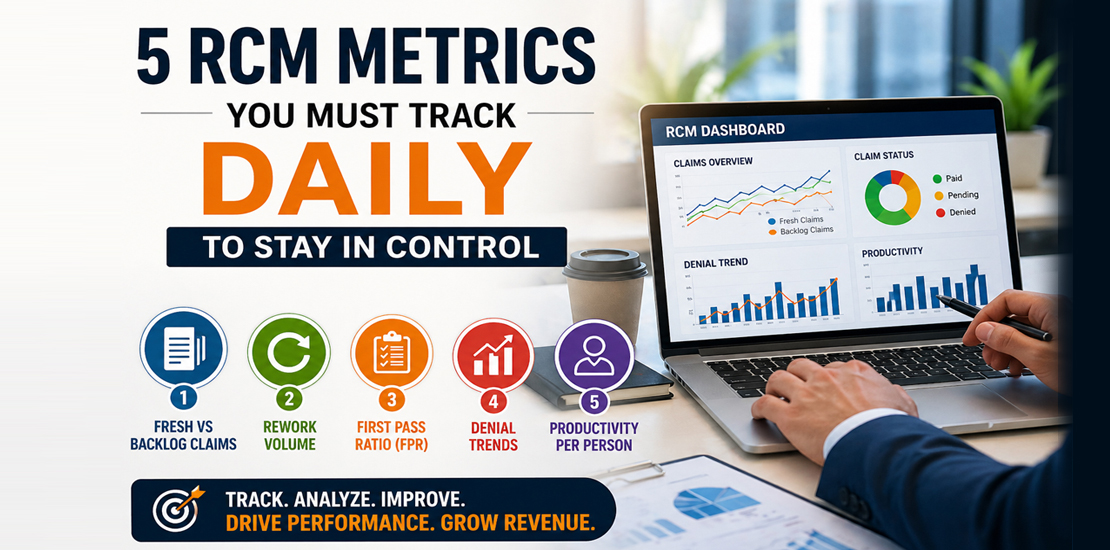
If You’re Not Tracking These 5 RCM Metrics Daily, You’re Running on Assumptions
If your day in RCM starts with meetings instead of numbers, chances are you’re reacting, not managing.
A lot of teams feel in control. They sit in reviews, talk through targets, and present dashboards. On paper, it all looks structured.
But if the core daily metrics aren’t being actively monitored and questioned, what you’re really doing is operating on assumptions.
And over time, that shows up where it hurts: missed SLAs, rising denials, inconsistent cash flow, and teams that look busy but don’t deliver real movement.
RCM rarely collapses overnight. It slips, slowly and quietly.
And that usually begins with not paying attention to the right things, consistently.
The 5 metrics that actually tell you what’s going on
There’s no shortage of data in RCM. But only a handful of metrics actually help you run operations day-to-day.
These five matter.
1. Fresh vs Backlog Claims
This is where control starts.
If you don’t have a clear view of what’s coming in versus what’s pending, you’re already behind.
Backlog doesn’t suddenly appear. It builds gradually, with missed follow-ups, unclear ownership, and small inefficiencies stacking up.
The real question isn’t just the number, it’s the response:
- Is the backlog increasing or getting cleared?
- Where is it getting stuck?
- Who is responsible for moving it?
Without this visibility, teams stay occupied but never get ahead.
2. Rework Volume
Rework is one of the most underestimated drains on productivity.
Every time a claim comes back, you’re spending effort twice. In many teams, this becomes so routine that it stops being questioned.
But it should be.
High rework usually points to deeper issues:
- Weak quality checks
- Training gaps
- Process inconsistencies
- Lack of ownership
Tracking it daily forces the right conversations:
- Why is this happening?
- Where is it starting?
- Why wasn’t it done right the first time?
Until those questions are asked regularly, rework keeps eating into time and margins.
3. First Pass Ratio (FPR)
This is your real quality indicator.
FPR tells you how much work goes out correctly the first time, not after corrections, not after follow-ups.
A strong FPR reflects clarity, discipline, and attention to detail.
A weak one usually means speed is being prioritised over accuracy.
And one common mistake, teams review this too late.
When you look at FPR daily:
- Patterns show up early
- Problem areas become visible
- Corrections happen before issues scale
4. Denial Trends
Denials aren’t random, but they’re often treated like they are.
Looking at overall denial rates isn’t enough. What matters is direction and cause:
- Which denial types are increasing?
- Which payors are contributing the most?
- Are the same mistakes repeating?
Denials usually reflect upstream problems, eligibility issues, coding gaps, missing documentation, and billing errors.
If you’re only fixing them after they happen, you’re always playing catch-up.
Strong teams don’t just resolve denials; they learn from them.
5. Productivity per Person
This is where things get real.
Team-level productivity can hide a lot. Individual data doesn’t.
When you break it down, you start to see:
- Who consistently delivers
- Who is underperforming
- Who is overburdened
But productivity alone can mislead.
The real picture comes from combining:
- Productivity + Quality + Rework
That’s what tells you who is actually effective, not just active.
Where teams usually miss the point
Most organisations already have these reports.
The issue isn’t availability, it’s usage.
Common patterns:
- Reviewing data without questioning it
- Focusing on dashboards, not decisions
- Treating numbers as updates instead of insights
There’s a big difference between reporting data and understanding it.
And that difference decides whether performance improves or stays stuck.
What changes when you use this right
When teams start using these metrics properly, things shift quickly:
- Conversations become more direct
- Decisions happen faster
- Accountability becomes clearer
- Excuses reduce
Because once numbers are understood properly, there’s very little room left for ambiguity.
The reality
If these five metrics aren’t part of your daily discipline, you’re not fully in control—no matter how structured things look.
And once you start tracking them seriously, one thing becomes obvious:
The issues were always there.
You just didn’t have enough clarity to see them.