
- June 22, 2026
- Posted by: medconverge
- Category: RCM
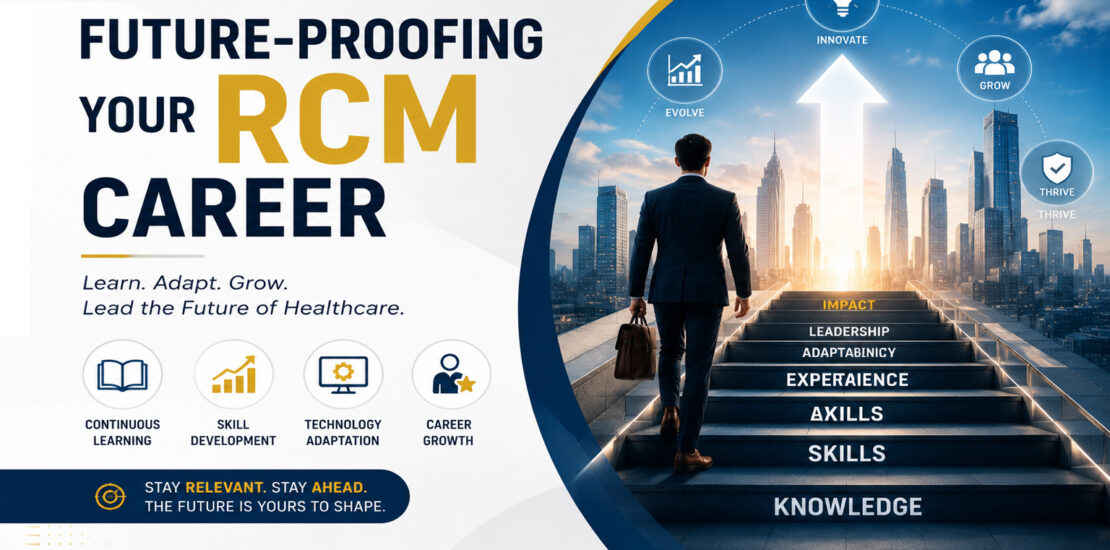
Adaptable Professionals Will Build the Future of Revenue Cycle Management
The conversation surrounding the future of Revenue Cycle Management (RCM) often centres on technology. Artificial Intelligence, automation, machine learning, and advanced analytics continue to reshape how healthcare organisations manage their revenue cycles. New tools are emerging at a pace that would have been difficult to imagine just a few years ago.
Whilst these developments are transforming the industry, they are also creating a misconception that technology alone will define future success.
The reality is rather different.
Technology is undoubtedly becoming a critical part of modern RCM operations, but the professionals who will thrive in the years ahead are not those who rely solely on technical expertise. They will be the individuals who successfully combine healthcare knowledge, technological awareness and exceptional communication skills.
The future belongs to professionals who can bridge all three.
Healthcare Knowledge Remains the Foundation
No matter how sophisticated technology becomes, RCM remains closely connected to the complexities of the healthcare industry.
Regulatory requirements continue to evolve. Payer policies change frequently. Documentation standards are refined. Compliance expectations become more demanding. Understanding these factors remains essential for anyone working within the revenue cycle.
Technology can support processes, but it cannot replace a deep understanding of how healthcare systems function, how reimbursement works or how operational decisions affect financial outcomes.
Professionals who continue to strengthen their healthcare knowledge will remain valuable regardless of how technology evolves.
Technology Awareness Is No Longer Optional
There was a time when healthcare operations and technology operated in separate worlds. That distinction is rapidly disappearing.
Today’s RCM professionals are expected to work alongside automation tools, reporting platforms, workflow management systems and increasingly sophisticated analytical solutions.
This does not mean everyone needs to become a technology specialist. However, understanding how technology influences workflows, productivity, quality and decision-making is becoming increasingly important.
Those who embrace new tools and learn how to use them effectively will often find themselves contributing more strategically to their organisations.
Technology should not be viewed as a threat to professional growth. It should be viewed as an opportunity to enhance capability and create greater value.
Communication Is Becoming a Differentiator
As automation takes over repetitive and transactional activities, human interaction becomes even more important.
Clients still expect clear explanations, professional discussions and practical solutions to operational challenges. Teams still require guidance, collaboration and constructive feedback. Stakeholders still need confidence in the people supporting their business objectives.
This is where communication makes a significant difference.
The ability to explain complex issues clearly, manage expectations, build relationships and influence decisions remains one of the most valuable skills a professional can develop.
Strong communication often determines whether expertise creates impact.
Knowledge has value, but the ability to communicate that knowledge effectively creates trust.
Human Judgement Cannot Be Automated
Automation can process transactions faster than people.
Artificial Intelligence can identify trends, flag anomalies, and analyse large volumes of information in seconds.
However, technology still has limitations.
It cannot fully understand the context behind every business challenge. It cannot build meaningful client relationships. It cannot navigate sensitive conversations with employees. It cannot exercise professional judgement in the same way experienced individuals can.
Critical thinking remains one of the most important skills in any profession.
The ability to evaluate information, assess risk, understand consequences and make informed decisions will continue to separate high-performing professionals from the rest.
Organisations will increasingly depend on individuals who can combine data-driven insights with practical business judgement.
Career Growth Will Depend on Continuous Development
The pace of change within healthcare and RCM shows no sign of slowing.
Professionals who remain committed to learning will be best positioned to succeed. This means developing industry knowledge, improving communication skills, understanding emerging technologies and expanding business awareness.
The most successful people are rarely those who become comfortable with what they already know. They are the ones who remain curious, adaptable and willing to evolve alongside their industry.
Professional development should not be viewed as an occasional activity or a requirement for promotion. It should be viewed as an ongoing investment in future opportunities.
Looking Ahead
The future of Revenue Cycle Management will not be defined by technology alone, nor will it be driven solely by traditional industry expertise.
Success will belong to professionals who can combine healthcare knowledge, technological awareness and strong communication skills whilst applying sound judgement to increasingly complex challenges.
Automation will continue to improve efficiency.
Artificial Intelligence will continue to enhance analysis.
But the qualities that build trust, strengthen client relationships and drive strategic decision-making will remain distinctly human.
For professionals looking to future-proof their careers, the most valuable investment is not simply learning the next tool or system.
It is investing in the knowledge, skills and judgement that technology cannot replace.