
- June 17, 2026
- Posted by: medconverge
- Categories: Personality Development, Workplace Culture
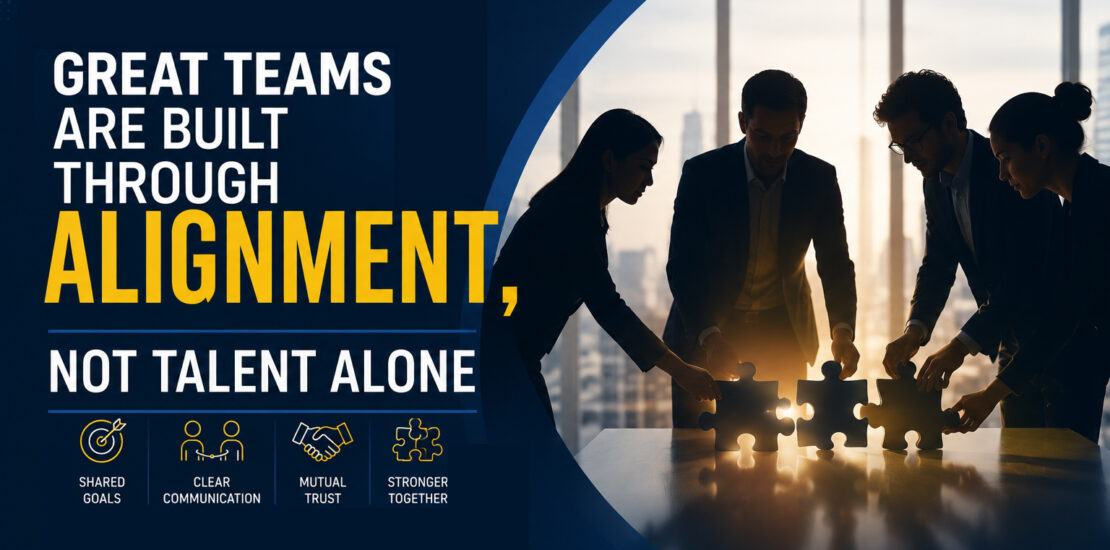
Great Teams Are Built Through Alignment, Not Talent Alone
Every organisation wants talented people.
Strong technical skills, industry knowledge and experience are valuable assets. Recruitment processes are often designed to identify the most capable candidates, and rightly so. However, many organisations discover that hiring talented individuals does not automatically create a high-performing team.
Talent can help complete tasks. Building a successful team requires something more.
The Difference Between Talent and Team Alignment
The difference between a group of talented employees and a genuinely effective team often comes down to alignment. When people understand their responsibilities, communicate openly, work towards common objectives and support one another, performance improves in ways that individual talent alone cannot achieve.
The strongest teams are rarely those with the most impressive collection of individuals. They are the teams where people work together with clarity, trust and shared purpose.
Accountability Must Become a Habit
In high-performing teams, accountability is not something that is enforced only when things go wrong. It becomes part of the team’s culture.
People take ownership of their responsibilities, meet commitments and accept responsibility for outcomes. They do not spend time looking for excuses or assigning blame when challenges arise. Instead, they focus on finding solutions and moving forward.
When accountability becomes a shared expectation rather than a management tool, trust begins to grow. Colleagues know they can depend on one another, and managers spend less time chasing updates and more time supporting performance.
Accountability creates consistency, and consistency creates results.
Feedback Should Be Viewed as an Opportunity
Many organisations encourage feedback, but not all employees feel comfortable giving or receiving it.
Strong teams understand that feedback is not criticism. It is information that helps individuals and teams improve. Whether it comes from managers, colleagues or clients, constructive feedback provides valuable insight into what is working and what needs attention.
A culture that welcomes feedback encourages continuous improvement. Employees become more willing to share ideas, identify risks and suggest better ways of working.
The goal is not perfection. The goal is progress.
Transparent Communication Prevents Problems
Communication remains one of the most overlooked factors in team performance.
Many workplace issues are not caused by a lack of ability. They are caused by misunderstandings, assumptions and unclear expectations.
Teams perform more effectively when communication is open, honest and consistent. Employees should understand priorities, expectations and organisational objectives. Managers should provide regular updates, clear direction and opportunities for discussion.
Transparency also builds trust. People are more likely to remain engaged when they understand what is happening around them and why decisions are being made.
Learning Should Never Stop
The most successful teams recognise that learning is an ongoing process rather than an occasional event.
Industries evolve, technology advances and client expectations change. Teams that continue to learn are better equipped to adapt and remain effective.
Learning does not always require formal training programmes. It can happen through coaching, mentoring, knowledge sharing, project reviews and day-to-day experience.
When organisations encourage curiosity and development, employees become more confident, capable and engaged in their work.
A team that is learning is a team that is improving.
Everyone Should Understand the Bigger Picture
One of the most common reasons employees become disengaged is that they lose sight of how their work contributes to organisational success.
People perform at their best when they understand the purpose behind their responsibilities. They need to know how their work affects clients, colleagues, operational performance and business outcomes.
When employees understand the bigger picture, decision-making improves. They are more likely to take initiative, identify opportunities for improvement and contribute beyond their immediate role.
Work becomes more meaningful when people understand the impact they are making.
Alignment Creates Sustainable Success
Many organisations focus heavily on activity. They measure tasks completed, hours worked and short-term productivity.
Whilst these measures have value, they do not always reflect long-term success.
Sustainable performance comes from alignment. It comes from ensuring that people understand the organisation’s goals, work together effectively and move in the same direction.
When accountability is embedded, feedback is welcomed, communication is transparent, learning is encouraged, and employees understand the wider purpose of their work, teams become stronger, more resilient and more effective.
Final Thoughts
Building a great team requires more than hiring talented individuals. Talent is important, but it is only one piece of the puzzle.
The organisations that consistently achieve outstanding results are those that invest in culture, communication and alignment. They create environments where people take ownership, support one another and work towards shared objectives.
Talent may help win individual tasks, but teamwork is what delivers meaningful outcomes.
And in the long run, organisations succeed not because everyone is busy, but because everyone is moving in the same direction.