
- July 27, 2026
- Posted by: medconverge
- Categories: RCM, Workplace Culture
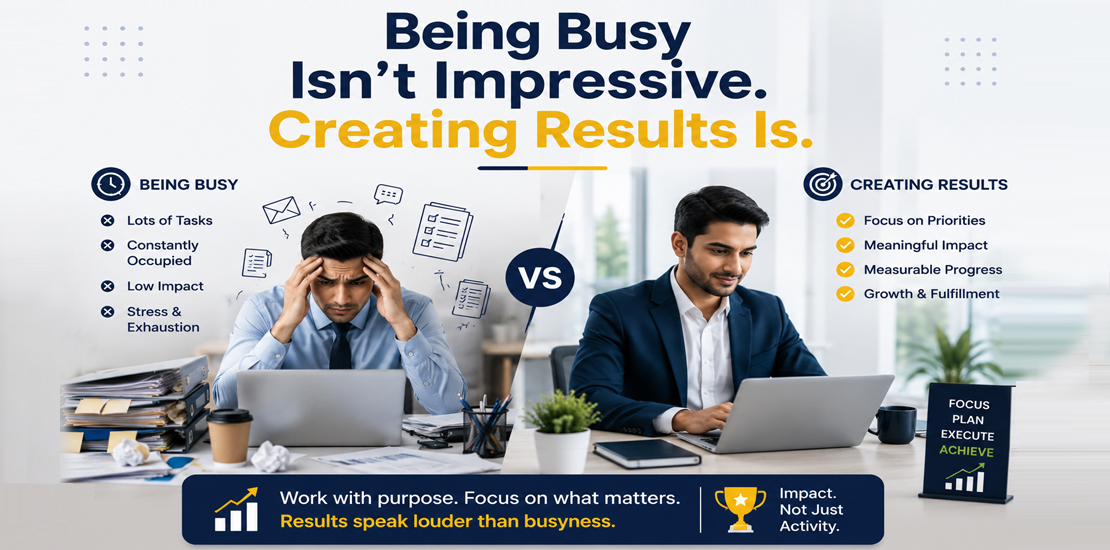
Being Busy Isn’t Impressive. Creating Results Is.
Walk into almost any workplace, and you’ll hear the same conversations.
“I’ve been in meetings all day.”
“I haven’t had time to take a break.”
“My inbox is overflowing.”
“It’s been so busy this week.”
Being busy has almost become a badge of honour.
But here’s the question every organisation should ask:
Is all that activity creating meaningful results?
In healthcare Revenue Cycle Management (RCM), where every action contributes to patient billing, reimbursement, and client satisfaction, being busy doesn’t always mean being productive. The real measure of success isn’t how occupied your day looked; it’s the value your work created.
Activity Doesn’t Always Equal Progress
Imagine two AR Specialists.
Both spend eight hours working.
The first makes hundreds of payer calls but doesn’t document conversations thoroughly or prioritise high-value accounts. By the end of the day, they’ve been constantly occupied, yet only a handful of claims move forward.
The second specialist makes fewer calls but focuses on ageing accounts, documents every interaction clearly, and resolves issues that unlock significant reimbursements.
Both were busy.
Only one created measurable impact.
That’s the difference organisations should recognise.
Productivity Is About Outcomes
Healthcare RCM is built on measurable performance.
- Eligibility verification completed accurately.
- Claims submitted the first time correctly.
- Denials resolved efficiently.
- Payments posted without delay.
- Accounts followed up with clear documentation.
These outcomes improve cash flow, reduce rework, strengthen client relationships, and keep the revenue cycle moving.
Simply spending more hours on a task doesn’t guarantee better results.
The quality and effectiveness of the work matter far more than the number of activities completed.
The Cost of Measuring Effort Alone
When organisations reward effort rather than outcomes, unintended behaviours begin to emerge.
Employees focus on looking occupied rather than solving problems.
Meetings increase without clear decisions.
Reports become longer instead of more useful.
People complete more tasks, but the work doesn’t necessarily move the business forward.
In Healthcare RCM, this can lead to delayed reimbursements, unnecessary follow-ups, repeated work, and missed opportunities to improve operational efficiency.
The goal isn’t to do more.
The goal is to achieve more.
High Performers Focus on What Moves the Needle
The professionals who consistently stand out don’t try to complete everything.
They identify what matters most.
They ask questions such as:
- Which accounts require immediate attention?
- Which denials have the greatest financial impact?
- Which task will yield the greatest improvement for the client today?
- Is this activity helping the team achieve its goals?
This mindset shifts the focus from staying occupied to creating value.
And that’s where real productivity begins.
Measuring Impact Creates Better Decisions
Every organisation tracks numbers.
The challenge is choosing the right ones.
Instead of celebrating how many emails were sent or how many hours were worked, successful organisations look at outcomes that truly matter.
For Healthcare RCM teams, that could include:
- Improved first-pass claim acceptance.
- Reduced denial rates.
- Faster turnaround times.
- Lower account ageing.
- Higher collection percentages.
- Better quality scores.
- Greater client satisfaction.
These metrics tell the real story of performance.
They show whether the work is making a difference, not just whether people stayed busy.
Small Improvements Deliver Big Results
Impact isn’t always created through major changes.
Sometimes it’s the result of small, consistent improvements.
- A clearer account note prevents duplicate work.
- A better prioritisation method resolves high-value claims sooner.
- A quick discussion between departments avoids unnecessary delays.
- One process improvement can save hundreds of hours over time.
The most productive professionals are always looking for ways to work smarter, improve quality, and remove obstacles—not simply add more to their workload.
Building a Results-Oriented Culture
A results-driven culture starts with asking better questions.
Instead of asking,
“How busy was the team today?”
Ask,
“What meaningful outcomes did we achieve?”
Celebrate employees who solve problems, improve processes, help colleagues, and create value for clients.
Recognise quality alongside quantity.
Reward ownership alongside effort.
When people understand that impact matters more than appearances, they naturally focus on work that drives organisational success.
Final Thoughts
Being busy isn’t difficult.
Anyone can fill a calendar, attend meetings, or work through a long list of tasks.
Creating meaningful results requires something different.
It requires focus.
It requires prioritisation.
It requires understanding how individual actions contribute to larger business goals.
In Healthcare RCM, every accurate claim, every resolved denial, every timely follow-up, and every process improvement strengthens the revenue cycle and improves the experience for clients and patients alike.
The next time your day feels overwhelming, pause for a moment and ask yourself one simple question:
Am I just staying busy, or am I creating impact?
Because at the end of the day, organisations don’t grow because people look busy.
They grow because people produce results.